
Welcome to Green Innovation
green technology & eco friendly homes
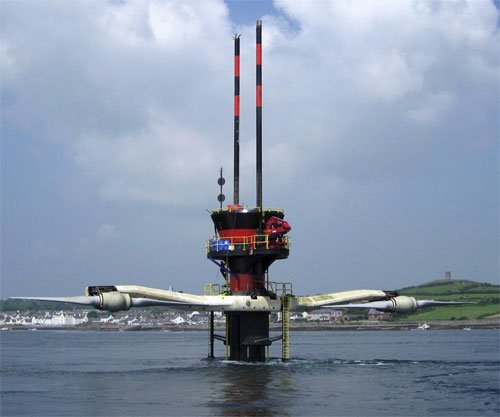
Tidal Energy
Governments and private investors alike are starting to examine the potential of environmentally friendly forms of energy
production, on a mass scale. One such solution is offered by tidal energy, which falls into two categories: energy
generated either by harnessing the power of tidal currents, or utilising the differential between high tide and low tide.
Tidal Stream Systems
Tidal stream systems are an example of first category. Often they resemble underwater wind turbines and in effect function
in the same way, except tidal currents turn the turbines rather than wind. Whilst the installation of Tidal Stream Systems
are a considerable civil engineering undertaking they are considered to have less of an environmental impact than the other
alternative.
Tidal Barrages
Tidal Barrages consist of a kind dam built across a tidal estuary. As the tide comes in, water is allowed to flow in to the
reservoir created by the dam, but at high tide a gate is closed, and as the tide falls again the water within the reservoir
is trapped. At low tide, another gate is opened allowing the water to flow out of the reservoir through turbines. Barrage
tidal energy power stations a huge civil engineering projects, requiring vast amounts of energy and resources to construct,
and with a lasting impact on the local environment, and yet, once in place they have the potential to go on generating cheap
and carbon neutral energy for generations.
back to green innovation eco-friendly technology
© Copyright 2004-2025 - greeninnovation
Tidal Energy
disclaimer | sitemap | links